
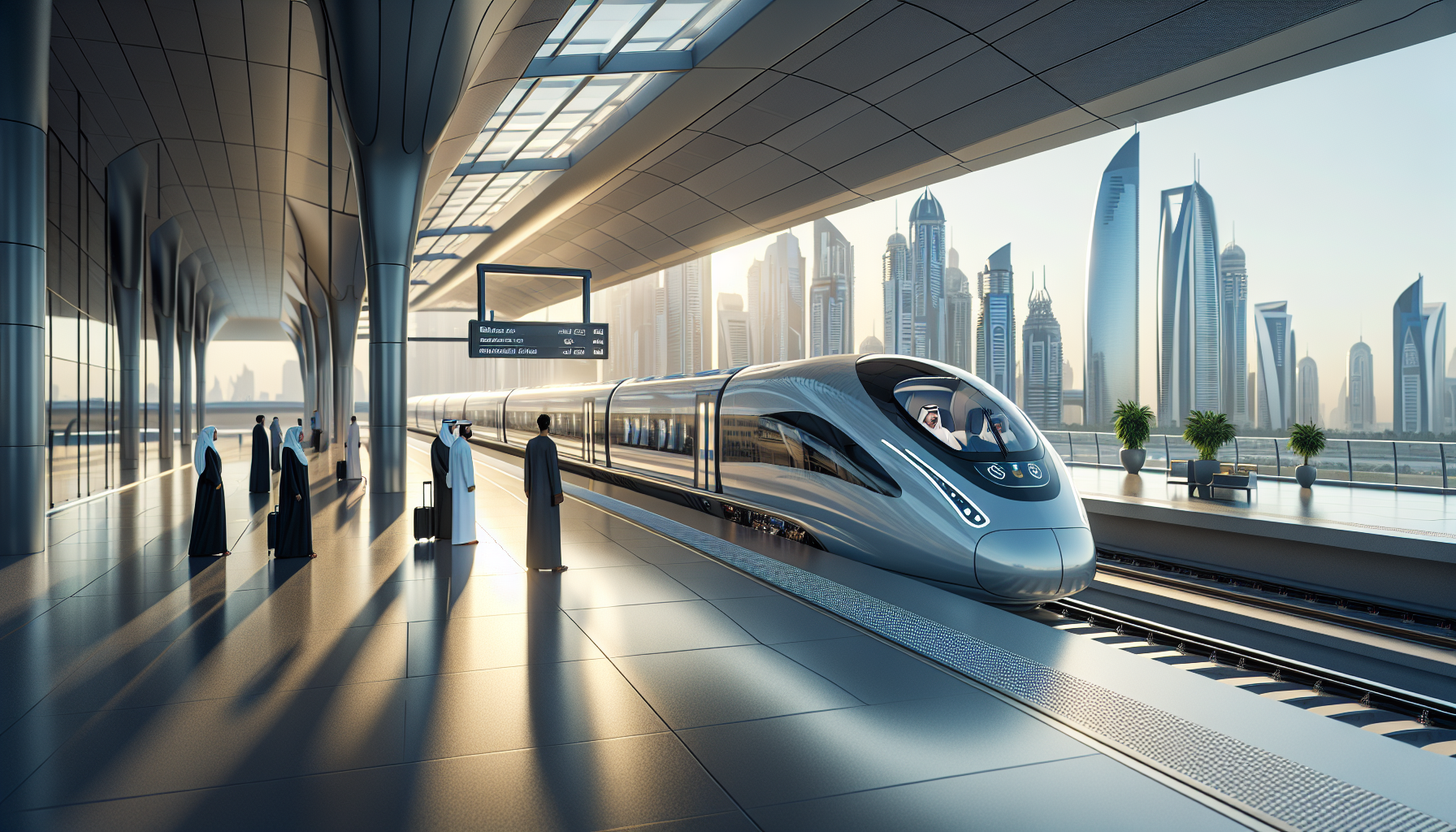
Etihad Rail has recently unveiled the travel times for its upcoming passenger rail services across the United Arab Emirates (UAE), significantly cutting down travel durations between major cities. The journey between Abu Dhabi and Dubai will now only take 57 minutes, marking a major milestone in the country’s transport infrastructure. This article delves into the specifics of these new travel times, their implications for mobility, and the overall development of the UAE’s rail network.
Train Schedules and Routes for Passengers
Etihad Rail’s passenger trains will connect 11 cities and regions throughout the UAE, including Al Sila, Al Ruwais, Al Mirfa, Abu Dhabi, Dubai, Sharjah, and Fujairah. The travel time from Abu Dhabi to Dubai is set at 57 minutes, while journeys from Abu Dhabi to Al Ruwais and Fujairah will take 70 minutes and 105 minutes, respectively. These trains will operate at speeds of up to 200 km/h, thereby reducing travel times by 30 to 40% compared to other modes of transport.
Infrastructure and Onboard Passenger Experience
The Etihad Rail network forms part of the UAE’s 50 billion dirham rail program, which includes a national network of railway projects connecting major cities and emirates. The passenger trains, designed by the Spanish company CAF, will be equipped with modern amenities such as Wi-Fi, entertainment systems, charging points, and various dining options. Each train will have a capacity of up to 400 passengers, offering different classes of service, including first class, business class, and economy.
Impact on Mobility and Sustainable Development
The introduction of these passenger trains is expected to boost tourism and trade, alleviate traffic congestion, and offer a more sustainable and efficient mode of transportation. The network will also integrate with existing transport infrastructure, including taxi and ride-sharing services. Projections suggest that the service will accommodate approximately 36.5 million passengers annually by 2030, heralding a transformative era in travel and mobility across the UAE.
In summary, the launch of Etihad Rail’s passenger services signifies a significant advancement in the UAE’s transportation sector. With reduced travel times, enhanced passenger experience, and a focus on sustainability, this initiative is poised to revolutionize the way people travel within the country. As new destinations and schedules are revealed, the impact of this project on national mobility and development will become even more evident.